Home · The Library · Leather, Explained
Full-Grain Leather, Explained
"Genuine leather" sounds like a promise. It's actually one of the lowest grades you can buy. Here's the hierarchy, in plain terms — and how to tell what you're really holding.
The grades, worst to best
- Bonded leather — leather scraps ground up and glued onto a backing. Plastic with a leather rumour. It peels.
- "Genuine leather" — a marketing term for the low end: thin, split, often heavily corrected and coated. The label is a warning, not a badge.
- Top-grain — the upper layer, sanded to remove imperfections. Decent, but the sanding strips the strongest fibres and the character.
- Full-grain — the entire top of the hide, nothing sanded away. The strongest, finest grade there is. It's the only leather that truly develops a patina.
The trick to watch for: three-ply and cardboard
Plenty of "luxury" cases hide their grade with construction. A common build is three-ply: a very thin, flattened skin of leather wrapped around a carton (cardboard) core to fake rigidity. It feels solid in the shop. Then the thin layers tire, the edges separate, and the structure softens. A single piece of thick full-grain needs no cardboard to hold its shape — the leather is the structure.
How to spot full-grain
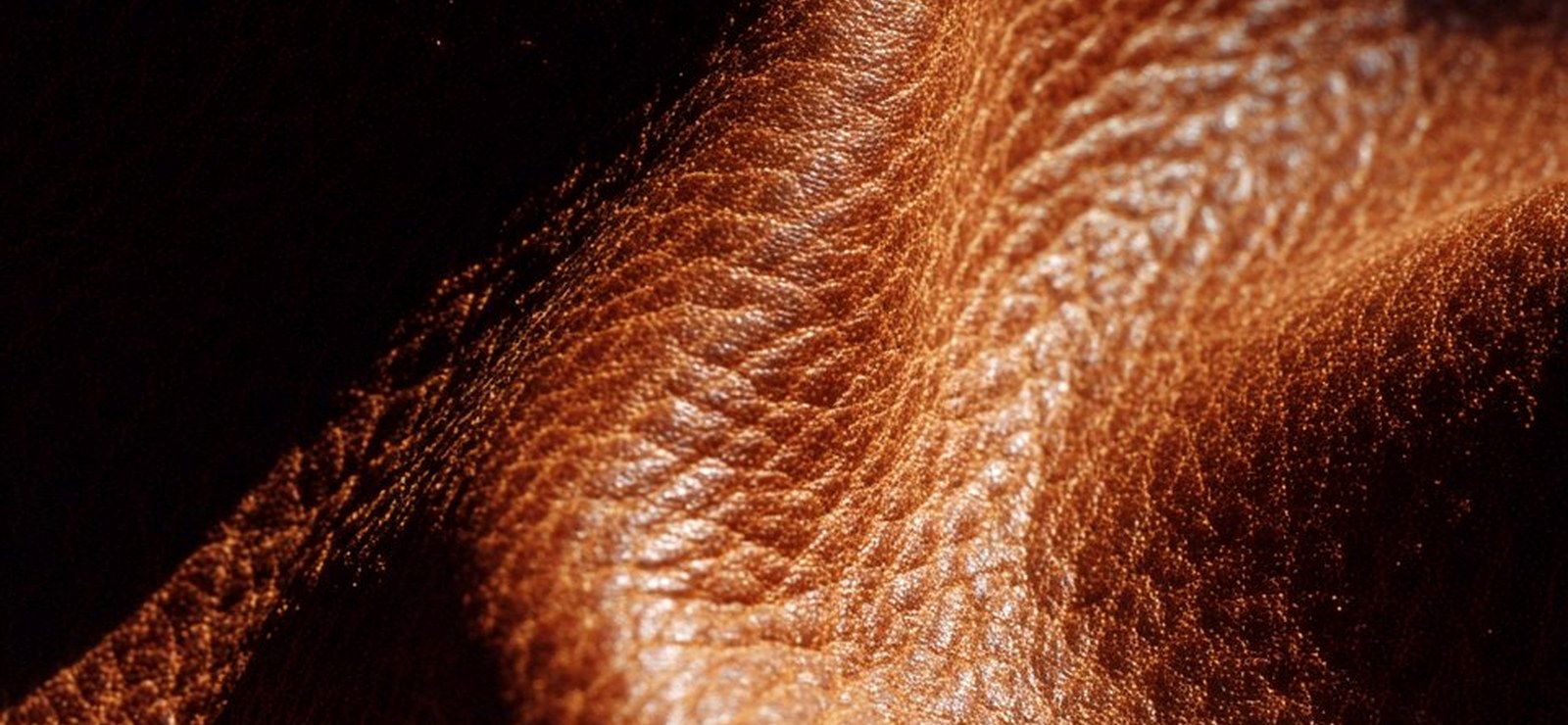
- Look at the surface: real grain is irregular, with tiny natural marks. Perfectly uniform "grain" is usually embossed onto a corrected hide.
- Look at the edge: full-grain shows a solid cross-section, not layers or a fibrous board between skins.
- Smell it: rich and earthy, not chemical or plasticky.
- Read the words: if it says "genuine leather" or "man-made materials," it isn't full-grain.
Why it gets better with age
Full-grain still has its natural fibres and oils intact, so instead of cracking or flaking, it burnishes — it darkens where you touch it and builds a glow that's impossible to fake. A little care (keep it dry, condition it once or twice a year) and it will outlive the man who bought it. That's the whole point.
Leathers kept for a few
Every Flores Tamez piece is a single solid piece of full-grain, worked smooth on the back — no lining, no layers.